BPC-157 peptide – Research Overview
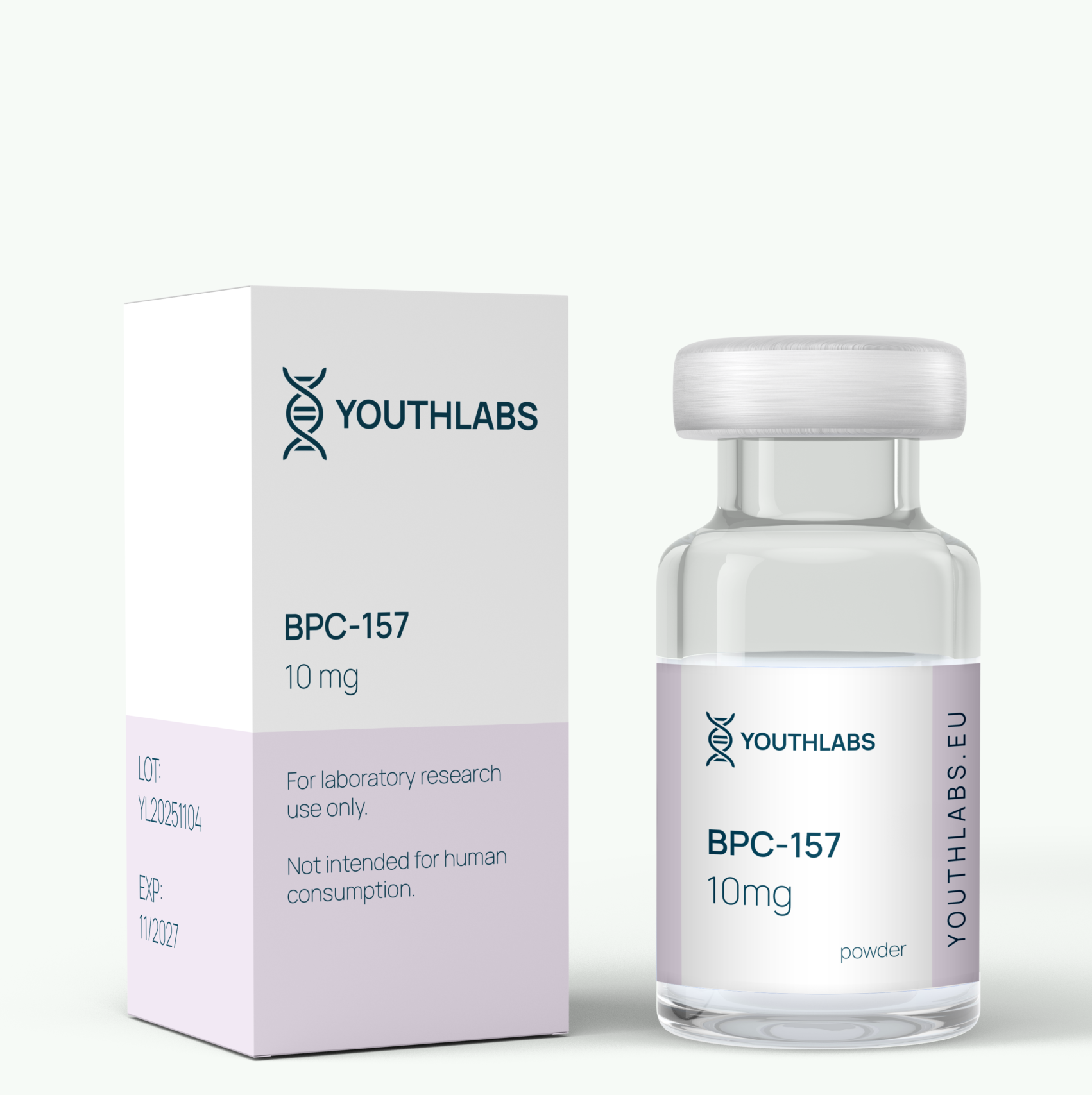
BPC-157 peptide is a synthetically produced research-grade peptide composed of a 15-amino-acid sequence. Its structure resembles a naturally occurring Body Protective Compound (BPC) originally identified in human gastric juice. Researchers study BPC-157 peptide because of its stable molecular structure and reproducible behavior in experimental systems. Therefore, it has gained sustained interest within basic biological and physiological research environments.
Scientists use BPC-157 peptide to investigate fundamental cellular and tissue-level signaling mechanisms. In this context, laboratory models allow researchers to analyze how biological systems maintain structural organization, cellular communication, and adaptive balance under controlled conditions. At the same time, studies explore how peptide-mediated signaling participates in regulatory processes across different tissue types.
Unlike compounds designed for direct therapeutic outcomes, BPC-157 peptide serves strictly as a research tool. As a result, investigators focus on mechanistic pathways and molecular interactions rather than clinical effects.
BPC-157 peptide in tissue and cellular research
In preclinical research settings, scientists frequently reference BPC-157 peptide in experimental models examining tissue structure, cellular renewal, and organizational stability. Additionally, these models support investigation of how cells coordinate adaptive responses to physical or biological stress.
Researchers also study BPC-157 peptide in laboratory systems focused on tendons, muscles, joints, ligaments, and connective tissues. Through these studies, research teams analyze how signaling pathways contribute to cellular coordination and tissue-level integrity.
Moreover, BPC-157 peptide appears in experimental research related to skin tissue, vascular structures, and nervous system signaling. These models help researchers explore how localized biological systems maintain communication and regulatory balance under experimental conditions.
BPC-157 peptide in vascular and microcirculation research
Due to its signaling profile, BPC-157 peptide is often included in experimental models examining vascular organization and microcirculation mechanisms. Consequently, researchers use these models to study how localized blood-flow regulation responds to tissue stress or controlled experimental injury.
In these settings, scientists analyze how signaling pathways support vascular coordination and adaptive regulation. At the same time, research focuses on understanding how microcirculatory processes integrate with broader tissue-level signaling networks.
These investigations remain limited to mechanistic and molecular analysis, without drawing conclusions related to clinical outcomes.
BPC-157 peptide as a research tool
Due to its well-defined structure, BPC-157 peptide serves as a reference compound in multiple areas of biological research. Consequently, researchers use it to compare signaling behavior across different tissue models and experimental systems.
Public scientific databases, including PubChem, provide molecular and structural reference data for BPC-157 peptide. Accordingly, researchers rely on these standardized resources when designing experiments and validating laboratory findings.
Research handling and laboratory use
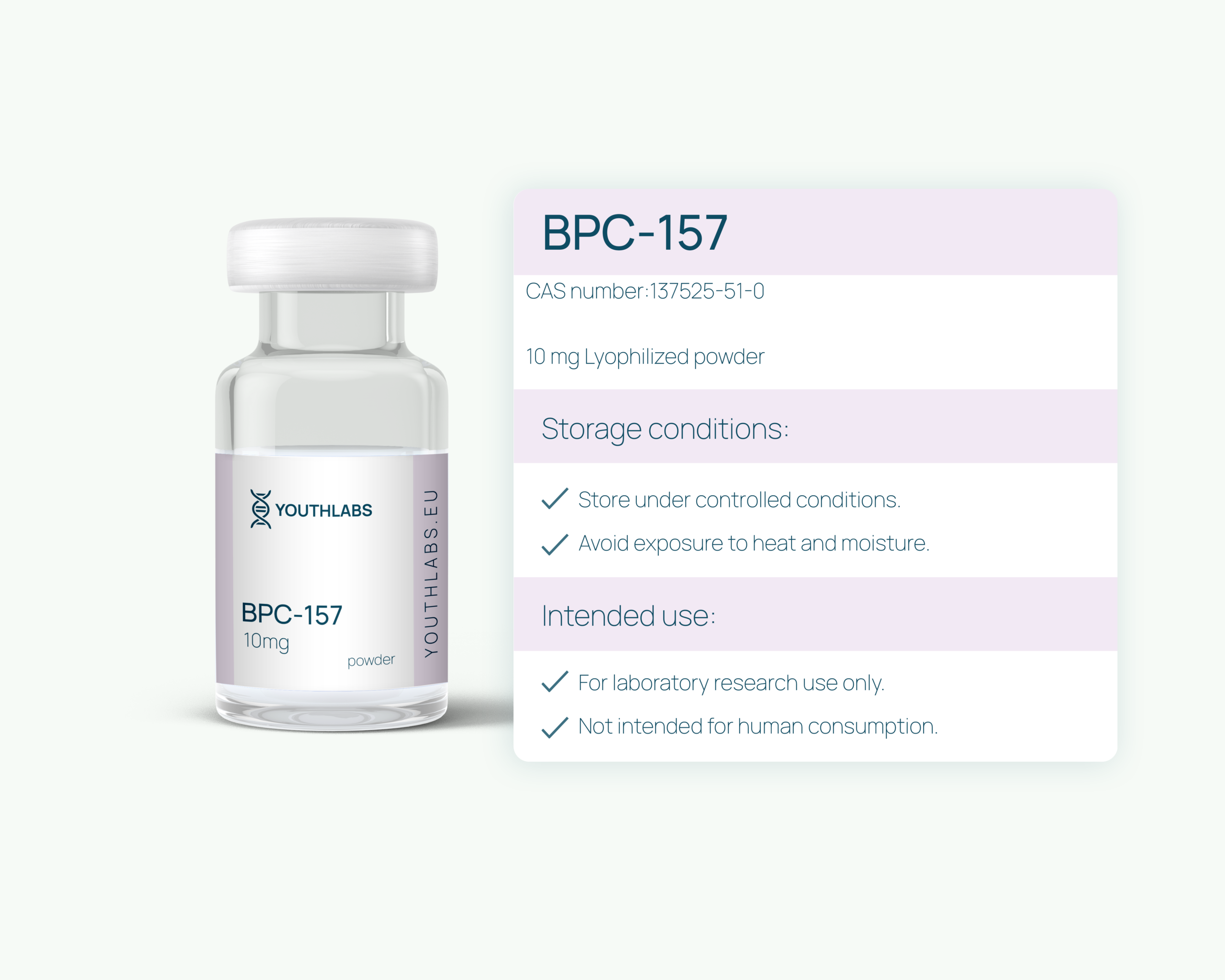
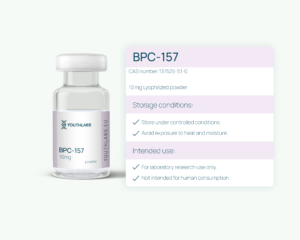
Laboratories handle BPC-157 peptide exclusively in controlled research environments. Additionally, appropriate storage conditions and standardized handling procedures help preserve peptide stability and experimental integrity. In turn, consistent laboratory protocols support reliable and reproducible research outcomes.
Therefore, all research involving BPC-157 peptide remains limited to in vitro and preclinical laboratory research models. Accordingly, these activities do not include clinical, therapeutic, diagnostic, or veterinary use.
Important Notice
This product is intended exclusively for laboratory and scientific research purposes.
Not intended for human or veterinary use.
Not intended for diagnostic, therapeutic, or clinical applications.
|
Compound
|
BPC-157
|
|
Quantity
|
10mg
|
|
Form
|
Lyophilized powder
|
|
Grade
|
Research-grade
|
|
Packaging
|
Sterile glass vial
|
|
Purity
|
99%+ (HPLC, third-party tested)
|
|
Storage Conditions
|
2–8 °C (lyophilized), keep desiccated, protect from light
|
|
Molecular Formula
|
C₆₂H₉₈N₁₆O₂₂
|
|
Molecular Weight
|
≈ 1419.5 g/mol
|
|
CAS Number
|
137525-51-0
|
0 reviews for BPC-157 10 mg
Add a review
Your email address will not be published. Required fields are marked *
Your rating *