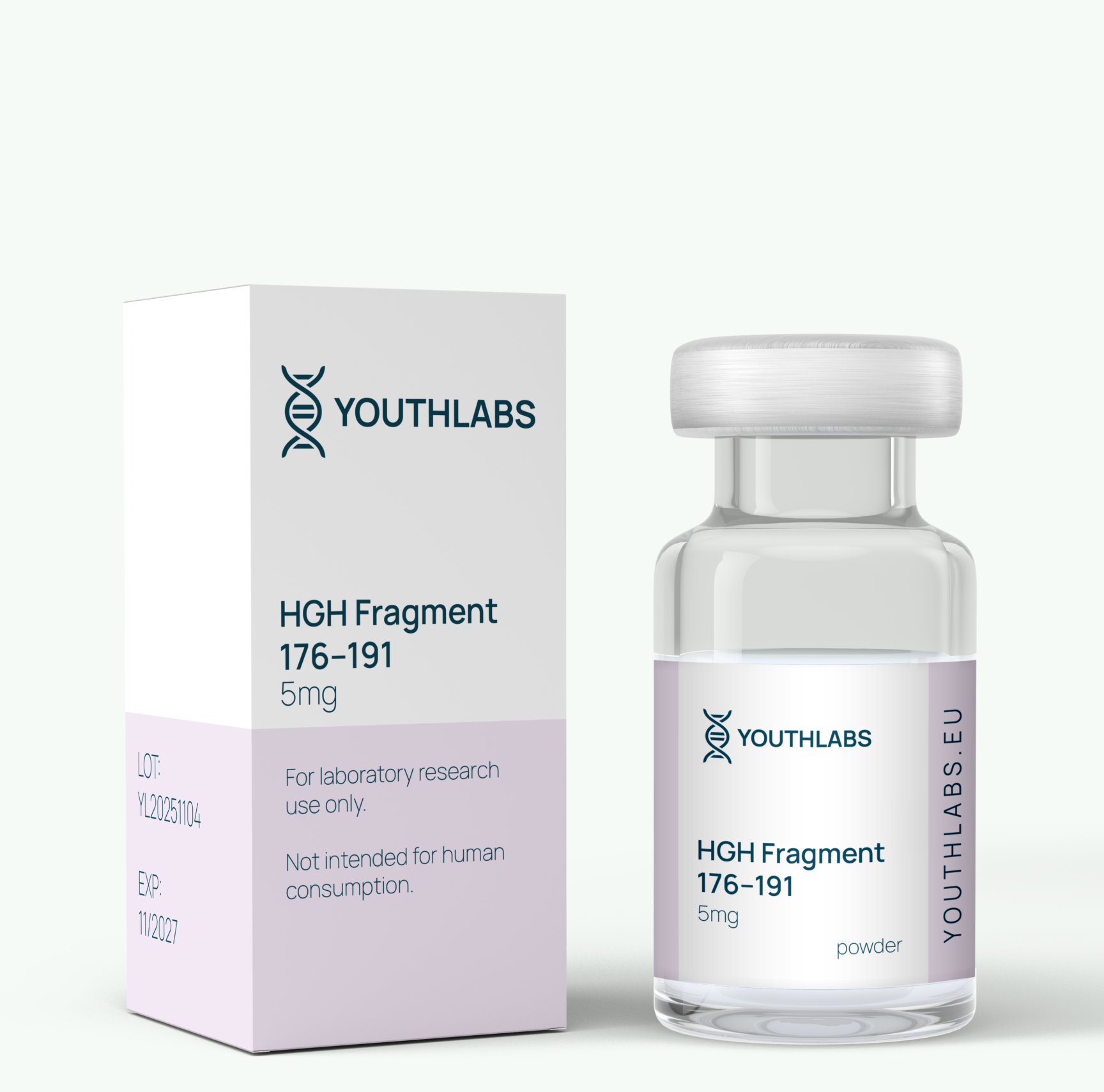
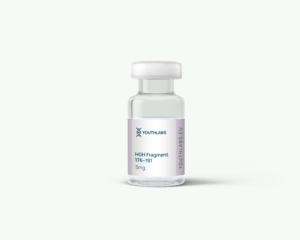
HGH Fragment 176–191 peptide 5 mg – Research Overview
HGH Fragment 176–191 peptide is a synthetic research-grade peptide derived from the C-terminal region of human growth hormone (HGH). Researchers study HGH Fragment 176–191 peptide in experimental models focused on energy regulation, fat-related metabolic signaling, and body composition mechanisms. Therefore, this peptide has attracted long-standing interest within metabolic and physiological research environments.
Scientists use HGH Fragment 176–191 peptide to investigate signaling pathways involved in energy utilization and metabolic adaptation. In this context, laboratory models allow researchers to analyze how biological systems manage energy distribution and substrate preference under controlled conditions. At the same time, these studies explore how specific peptide fragments interact with metabolic signaling networks without broadly affecting unrelated hormonal systems.
Unlike full-length growth hormone or broad secretagogues, HGH Fragment 176–191 peptide provides a highly targeted research model. As a result, researchers can focus on metabolism-related signaling mechanisms while minimizing interference with other growth hormone–associated pathways.
HGH Fragment 176–191 peptide in metabolic research
In metabolic research, scientists frequently reference HGH Fragment 176–191 peptide in experimental models examining energy efficiency and fat-related metabolic processes. Additionally, these models support investigation of how organisms adapt to changes in energy demand and metabolic stress.
Researchers also study HGH Fragment 176–191 peptide in laboratory settings focused on body composition signaling and physiological adaptation. Through these studies, research teams analyze how metabolic signaling contributes to long-term energy balance and adaptive efficiency at the cellular level.
Moreover, HGH Fragment 176–191 peptide often appears in experimental research related to physical demand and metabolic optimization models. These studies help scientists explore how biological systems regulate energy use during sustained or increased metabolic load.
HGH Fragment 176–191 peptide in adaptation and energy regulation studies
Due to its fragment-specific signaling profile, HGH Fragment 176–191 peptide is commonly included in experimental models focused on metabolic adaptation and energy regulation mechanisms. Consequently, researchers use these models to study how biological systems respond to nutrient availability, energy expenditure, and adaptive metabolic signaling.
In comparative research environments, scientists may evaluate HGH Fragment 176–191 peptide alongside other metabolism-related research compounds. This approach supports deeper analysis of differences between fragment-based signaling models and broader endocrine regulation pathways.
Public scientific databases, including PubChem, provide biochemical and molecular reference data for HGH Fragment 176–191 peptide. Accordingly, researchers rely on these standardized resources when designing experimental protocols and validating laboratory research data.
Research handling and laboratory use
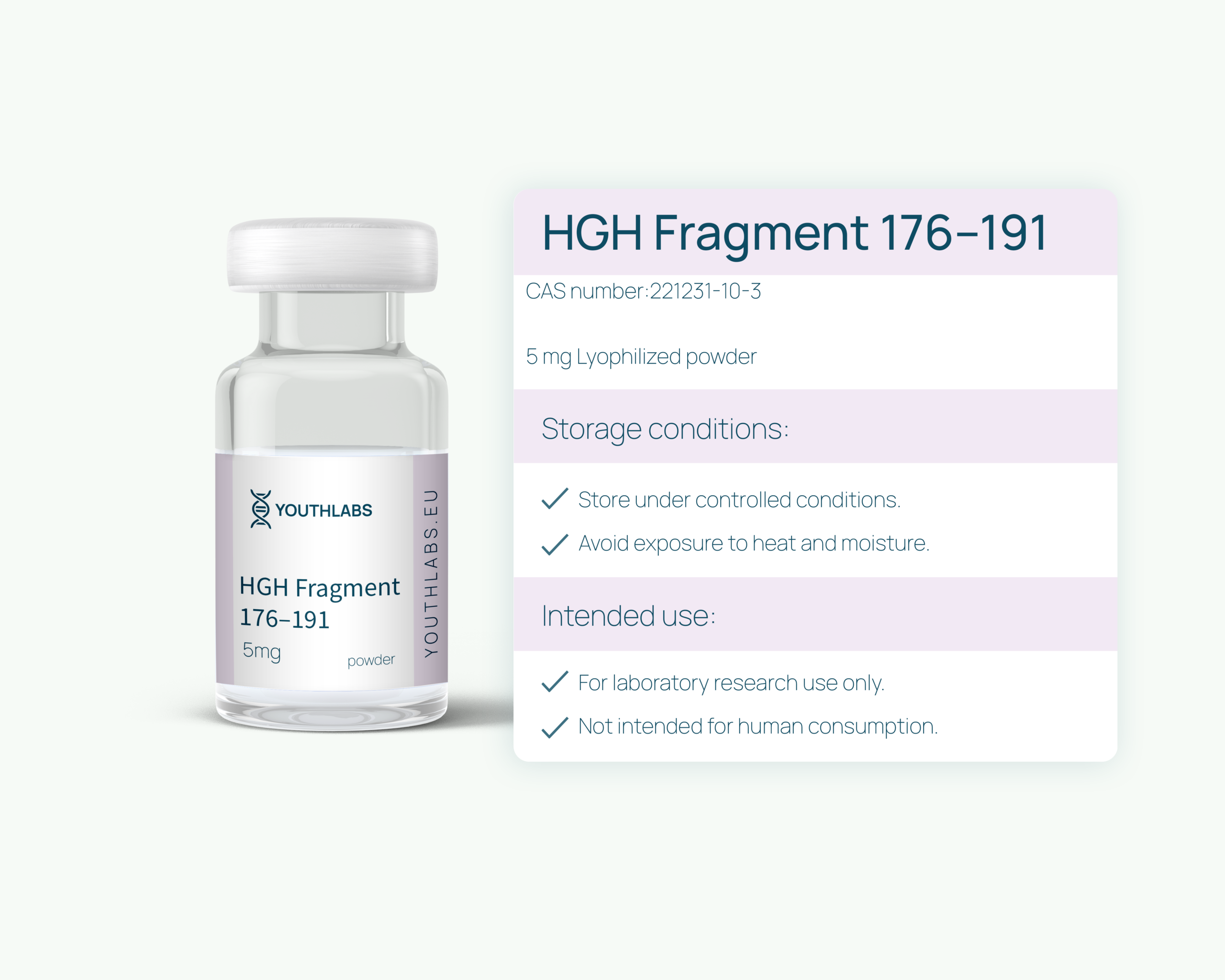
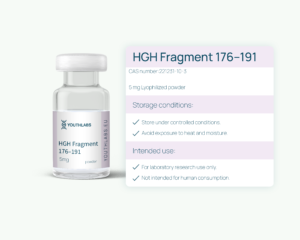
Laboratories handle HGH Fragment 176–191 peptide exclusively in controlled research environments. Additionally, proper storage conditions and standardized handling procedures help maintain peptide stability and integrity. In turn, consistent laboratory protocols support reliable and reproducible research outcomes.
Therefore, all research involving HGH Fragment 176–191 peptide remains limited to laboratory and experimental research models. Accordingly, these activities do not include clinical, therapeutic, metabolic, or diagnostic use.
Important Notice
This product is intended exclusively for laboratory and scientific research purposes.
Not intended for human or veterinary use.
Not intended for diagnostic, therapeutic, or clinical applications.
|
Compound
|
HGH Fragment 176–191
|
|
Chemical name
|
Human Growth Hormone Fragment 176–191
|
|
Quantity
|
5mg
|
|
Form
|
Lyophilized peptide powder
|
|
Purity
|
High-purity research grade
|
|
Packaging
|
Glass vial with sterile closure
|
|
Storage conditions
|
Store lyophilized at 2–8 °C. Keep desiccated and protected from light.
|
|
Molecular formula
|
C₇₈H₁₂₁N₂₃O₂₂
|
|
Molecular weight
|
≈ 1815.1 g/mol
|
|
Sequence
|
Tyr-Leu-Ser-Val-Leu-Leu-Gly-Tyr-Ser-Leu-Ser-Ser-Val-Gln-Gly-Leu
|
|
CAS Number
|
221231-10-3
|
0 reviews for HGH Fragment 176–191 5mg
Add a review
Your email address will not be published. Required fields are marked *
Your rating *